
Owning a BMW is about the “Ultimate Driving Machine” experience, and not just getting from Point A to Point B. These vehicles are marvels of German engineering, designed to provide a specific harmony of power, agility and luxury.
However, maintaining that visceral connection between the driver and the road requires more than just basic oil changes. It requires a BMW mechanic who understands the intricate DNA of these vehicles.
Choosing a certified professional is a necessary investment in the long-term performance and reliability of your automotive investment.
In this article, we’ll discuss:
- Why BMW engineering is unique
- The difference having BMW certification makes
- How to protect the investment in your BMW long term
- Questions to ask a certified BMW technician
What Makes BMW Engineering Unique

BMW vehicles are built to exacting standards that differ significantly from domestic or Japanese counterparts. From the near-perfect 50/50 weight distribution to the sophisticated Valvetronic engine technology, every component is part of a complex, integrated system to keep up optimal performance.
This German precision engineering means that tolerances are tighter and computer systems are more interconnected. A standard BMW repair often involves navigating advanced fiber-optic networks and BMW-specific computer modules that govern everything from suspension dampening to fuel mapping.
Without specialized knowledge, a general technician may overlook the nuance required to keep these German cars’ systems in sync.
The Certification Difference: Training & Expertise
What truly separates a certified BMW mechanic from a generalist is rigorous, factory-level training for all the essential things a business would need to know.
Certification means the technician has spent hundreds of hours studying BMW-specific diagnostic paths and mechanical configurations, and are knowledgeable about high performance cars, are familiar with maintenance services and have the ability to do things such as engine repair.
Ongoing Education Helps Teams Stay Current with Trends and Advancements
The legendary handling and acceleration of a BMW are the first things to suffer when maintenance is neglected or performed incorrectly. High-performance engines, particularly those featuring VANOS variable valve timing and Valvetronic systems, require specific fluid viscosities and high-grade filters to prevent sludge buildup and internal friction.
During BMW repair services, using the wrong specification of oil or an inferior aftermarket part can lead to a noticeable drop in responsiveness. According to the Society of Automotive Engineers (SAE), precision-engineered vehicles rely heavily on exact fluid dynamics to maintain cooling and lubrication efficiency under high-stress driving conditions.
Maintaining the Precision of the Ultimate Driving Machine
BMW engines are designed with tighter tolerances than standard passenger vehicles. When you deviate from Original Equipment Manufacturer (OEM) standards, you are fundamentally altering the engine’s operational map.
Poor filtration allows microscopic contaminants to bypass the oil filter, scoring cylinder walls and clogging the delicate oil passages that feed the turbochargers. This degradation is often subtle at first, such as a slight hesitation during overtaking or a minor dip in fuel economy, but it serves as the precursor to catastrophic mechanical failure.
Thermal Management and Fluid Integrity
Beyond the engine block, BMW’s performance is tethered to its cooling and drivetrain fluids. The cooling systems in these vehicles operate under high pressure to manage the intense heat generated by high-compression ratios.
Utilizing non-approved coolants can lead to electrolysis and premature water pump failure. Similarly, the sophisticated logic of a ZF transmission relies on the specific frictional properties of high-grade synthetic fluids.
Neglecting these lifetime fluids often results in sluggish shifts and a loss of that crisp, connected feeling that defines the brand’s driving dynamics.
Longevity: Protecting Your Investment
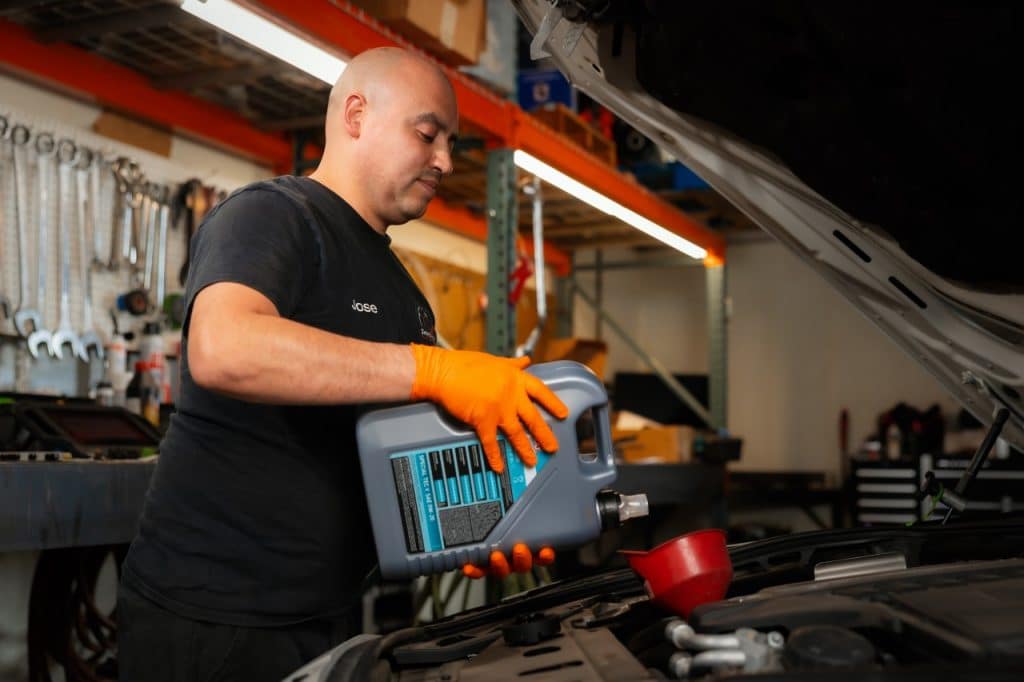
A BMW is a significant financial asset, and its resale value is tied directly to its service history. Documented care from a certified BMW mechanic proves to future buyers that the vehicle was maintained without compromises, and it’s able to be tracked.
Beyond the paperwork, proper care prevents the domino effect of mechanical failure. For instance, addressing a small cooling system leak today prevents a catastrophic engine overheat tomorrow.
By adhering to a strict maintenance schedule, your BMW will remain on the road for hundreds of thousands of miles rather than see its life end prematurely in a scrap yard, or with a sale sign on it.
The Risks of Using Non-Certified Mechanics
Taking your vehicle to a discount shop for a BMW car repair often leads to the “expensive cheap fix.”
General mechanics frequently rely on generic OBD-II scanners that only provide surface-level error codes, leading to misdiagnosis and the replacement of perfectly good parts.
Furthermore, using non-OEM parts can potentially void certain warranties and lead to fitment issues that cause secondary vibrations or leaks, which can be dangerous and slow the speed of your car down.
The hidden costs of uncertified service eventually manifest as recurring problems that a specialist would have solved correctly the first time.
The Diagnostic Blind Spot
BMW utilizes a proprietary communication protocol known as ISTA (Integrated Service Technical Application). While a general shop uses a generic scanner, these tools often fail to access deep-level control modules responsible for the intricate balance of the powertrain and chassis.
A non-certified mechanic might see a generic misfire code and replace spark plugs, while a BMW specialist using factory diagnostics would identify the true culprit: a failing eccentric shaft sensor or a precision-timed fuel injector calibration issue.
This lack of specialized equipment leads to parts cannon repairs, where the owner pays for unnecessary components while the underlying fault remains.
Engineering Mismatch and Component Failure
BMW components are engineered as part of a cohesive system where weight, heat dissipation and electrical resistance are calculated to the millimeter.
Non-certified shops often turn to aftermarket parts to keep costs low. These parts frequently lack the structural integrity of OEM equivalents.
For example, a budget suspension bushing might fit the control arm but possess a different durometer (hardness) than specified. This creates secondary harmonic vibrations that ruin the ride quality and accelerate wear on the steering rack and tires, effectively compromising the vehicle’s active safety systems.
Software Synchronization and Module Coding
On modern BMWs, nearly every mechanical repair requires a software handshake. When a battery, alternator or steering rack is replaced, it must be registered or coded to the vehicle’s Digital Motor Electronics (DME).
Uncertified mechanics often overlook this step, leading to overcharging of the electrical system or limp mode errors. Without the ability to update the vehicle’s I-Level (Integration Level) software, a discount shop can’t guarantee that your car is running the latest manufacturer-issued logic, which often includes critical patches for engine longevity and transmission smoothness.
Specialized Diagnostic Tools & Technology
Modern BMWs are essentially high-powered computers on wheels. Accessing the vehicle’s control modules requires specialized interface equipment to connect that generic shops simply do not invest in.
A certified BMW mechanic uses these tools to perform deep-system scans and software coding that give them the full picture of your vehicle so they can confirm the actual problem and plan out a fix. Whether it is registering a new battery to the charging system or recalibrating steering angle sensors, these tasks cannot be done accurately with one-size-fits-all tools.
This technology allows us to pinpoint issues with surgical precision, saving you time and money on labor.
BMW-Specific Common Issues & Maintenance Needs

Certain models have unique needs, such as the cooling system plastic components in older 3-series or the intricate VANOS variable valve timing units in high-performance M-series engines.
Understanding the specific service indicator lights, including the Condition Based Service (CBS) system, is vital for a successful BMW car repair. We emphasize the use of BMW-approved fluids for transmissions and differentials, which are often sealed for life by the factory but benefit greatly from specialized interval changes to ensure drivetrain longevity.
Common Issue #1: Cooling System Plastic Components
BMW’s use of pressurized plastic components is a well-documented weak point. Over time, constant heat cycling makes these parts brittle, leading to hairline cracks that can cause sudden, catastrophic coolant loss.
Because BMW engines operate at high thermal efficiency, even a few minutes of driving while low on coolant can warp the aluminum cylinder head. Replacing these components proactively with upgraded aluminum or high-grade composite alternatives is a hallmark of a specialist who understands the 3-series and 5-series platforms.
Common Issue #2: VANOS Variable Valve Timing Failures
The VANOS system uses oil pressure to adjust the position of the camshafts, allowing for a broad power band and smoother idling.
However, the internal seals and solenoid valves are highly sensitive to oil quality. When these seals harden or the solenoids become clogged with sludge, the car suffers from erratic idling, a loss of low-end torque and the dreaded “limp mode.”
A specialist repair involves replacing the solenoids and often rebuilding the unit with upgraded Viton seals that can withstand higher temperatures than the factory rubber, ensuring the engine breathes correctly at all RPM ranges.
Common Issue #3: Oil Filter Housing Gasket (OFHG) Leaks
The gasket between the oil filter housing and the engine block is a frequent source of stealth leaks. While a small oil drip might seem minor, the OFHG is positioned directly above the serpentine belt.
If oil soaks into the belt, it can cause it to slip off or, in extreme cases, snap and get sucked through the front main seal into the engine.
Identifying this leak early requires an eye for the specific pooling patterns common in N52 and N55 engines. Addressing this prevents a simple gasket replacement from turning into a total engine teardown due to belt ingestion.
Common Issue #4: Carbon Buildup on Intake Valves
Many modern BMWs utilize Direct Injection (DI) to maximize power and efficiency. While effective, this means fuel no longer washes over the intake valves to clean them. Over time, carbon deposits bake onto the valves, restricting airflow and causing stuttering under acceleration and decreased fuel economy.
A general shop might suggest expensive fuel additives that do nothing for DI engines. An authoritative repair involves Walnut Blasting, a specialized procedure where crushed walnut shells are used to safely scour the valves back to a like-new state without damaging the engine’s internal surfaces.
Cost Considerations: Value vs. Price
Many owners hesitate to visit a specialist due to perceived costs. However, true value is found in the accuracy of the work and the longevity of the repair. Investing in quality today prevents the astronomical costs of engine or transmission failure in the future.
The following table breaks down the difference between the “discount” approach and specialized BMW care:
| Feature | Discount General Shop | Certified BMW Specialist |
| Diagnostic Accuracy | Rely on generic OBD-II codes; often results in “trial and error” parts replacement. | Use of ISTA/P factory software for pinpoint accuracy and module coding. |
| Part Quality | Generic or “white-label” aftermarket parts with varying tolerances. | OEM or Genuine BMW parts designed for specific thermal and stress loads. |
| Labor Efficiency | Mechanics “learn on your dime” while researching unfamiliar BMW engine layouts. | Specialists follow factory-standardized procedures for faster, more reliable turnarounds. |
| Long-Term Cost | Lower upfront price, but frequent “comebacks” and secondary failures increase total spend. | Higher initial investment that preserves resale value and prevents catastrophic engine damage. |
| Warranty & Safety | Risk of voiding manufacturer warranties; potential fitment issues. | Work is performed to factory spec, maintaining your warranty and vehicle safety integrity. |
Questions to Ask When Choosing a BMW Mechanic
Before handing over your keys, ask about the shop’s credentials and their specific experience with the chassis you drive. A transparent shop will be happy to explain their process and justify their choice of components.
To make sure your vehicle is in the right hands, consider asking the following high-level questions:
- Do you use BMW-specific diagnostic software like ISTA?
- What is your policy on OEM vs. Aftermarket parts?
- Are your technicians trained on specific BMW engine families?
- Can you provide a digital health report with photos?
- Do you follow BMW’s Condition Based Service (CBS) intervals?
A transparent shop will be happy to explain their process.
Why Simmonson Automotive for Your BMW
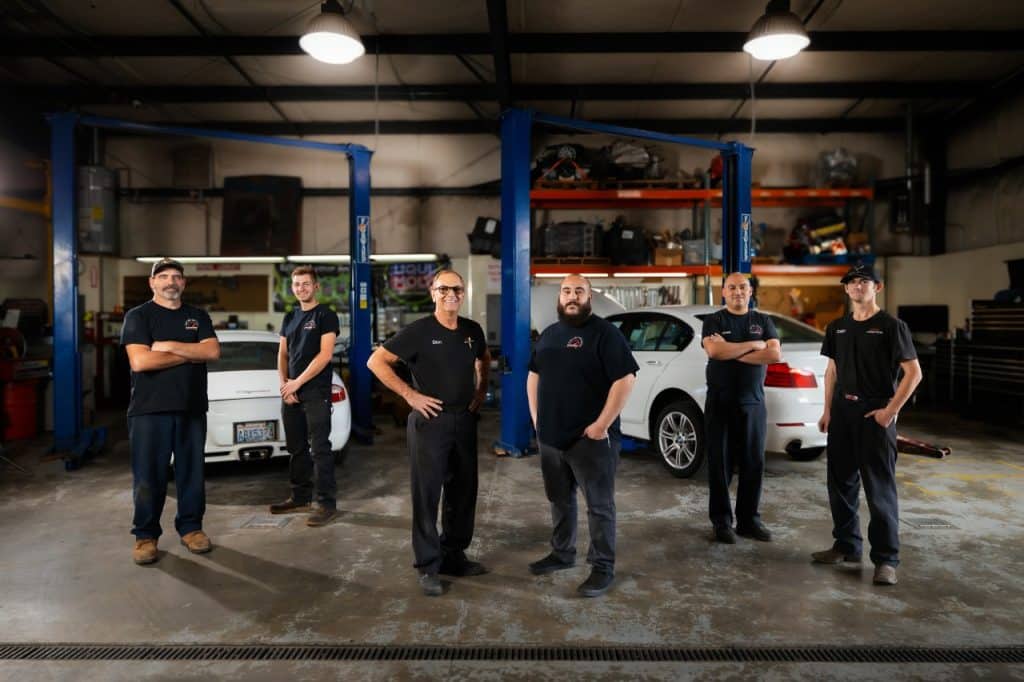
At Simmonson Automotive, we are enthusiasts who appreciate the art of German engineering. Our team of certified BMW mechanic professionals is dedicated to maintaining the performance and longevity standards your vehicle was born with.
We combine the high-level expertise of a dealership with the personalized, transparent service of a local independent shop. We focus on several core pillars of service:
- Factory-Level Diagnostics
- Performance-First Mindset
- Uncompromising Part Standards
- Transparent Technical Guidance
- Specialized Tooling
We understand that your BMW is a reflection of your hard work and passion for driving, and we treat every vehicle in our bay as if it were our own. Whether you are looking to preserve the smooth idle of a classic 3-series or the raw power of a modern M-platform, our specialists are ready to provide the technical stewardship your car deserves.
Ready to Experience the Difference Certified BMW Service Makes? Trust Your BMW to Specialized Experts!
Contact Simmonson Automotive today to schedule your BMW car repair or maintenance with our certified BMW mechanic team. We’ll treat your vehicle with the specialized care it deserves, protecting your investment, maintaining peak performance, and ensuring years of driving enjoyment.
Call now or schedule online to discover why BMW owners throughout the area trust us with their prized vehicles!