
You picked up your BMW 5 Series plug-in, your Porsche Cayenne E-Hybrid, or your Volvo Recharge and figured the electric side of things would make ownership simpler. Less fuel. Fewer trips to the shop. Brakes that last longer. And in some ways, that is true.
But European hybrids are not simpler vehicles. They are two sophisticated systems sharing one platform, and caring for them properly means understanding both sides. The combustion engine still needs everything it always needed. The high-voltage battery, the cooling circuits, the control modules — those add a layer of hybrid vehicle maintenance that does not exist on a conventional car, and that a general shop is not always equipped to address.
Here is what changes, what stays the same, and why the shop you choose matters more than it used to.
What a European Hybrid Actually Is
A European hybrid combines a high-voltage electric motor and traction battery with a traditional internal combustion engine. The two systems work together constantly, handing power back and forth depending on speed, load, and driving mode. That integration is what makes these vehicles so capable. It is also what makes them more complex to service.
BMW, Audi, Porsche, Volvo, and Land Rover each build their hybrid systems on proprietary platforms that vary by model and year. The architecture of a Porsche Cayenne E-Hybrid is not the same as a Volvo Recharge, and neither resembles a mass-market hybrid from a Japanese manufacturer. A technician who knows one platform well does not automatically know the others.
Not every hybrid concern requires a specialist. Routine items like oil changes and tire rotations are straightforward. But anything involving the high-voltage system, battery health, or software calibration requires factory-grade diagnostic access and model-specific training.
What Stays the Same
Plenty of familiar hybrid vehicle maintenance tasks carry over without much change.
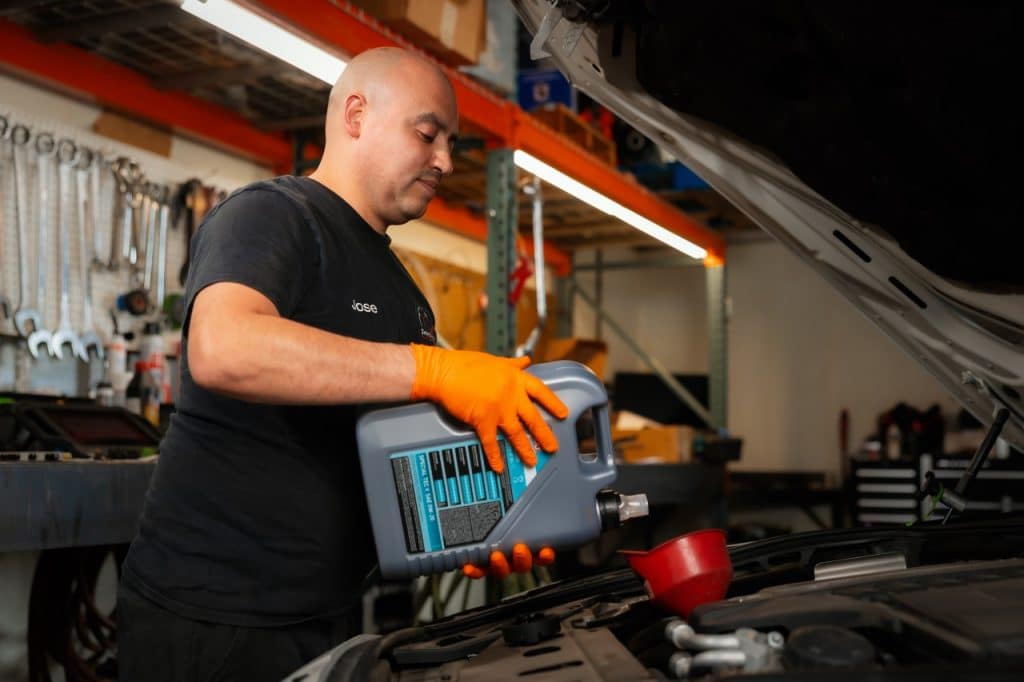
Oil changes still matter. Hybrid engines still run on combustion power, especially at highway speeds and under sustained load. The engine needs clean oil at the correct interval, with the right synthetic blend for that specific model. Some hybrid engines run less frequently than a conventional engine, which can actually affect how oil degrades over time. That is a reason to follow the manufacturer’s interval closely, not to skip the service.
Tire rotations, wheel alignment, cabin air filters, and coolant condition all follow schedules similar to their conventional counterparts. These are not glamorous services, but skipping them because the car “feels fine” or runs on electricity part of the time is how small issues become expensive ones.
What Changes: The Hybrid-Specific Systems
This is where hybrid vehicle maintenance diverges from what most drivers are used to.
High-Voltage Battery Health
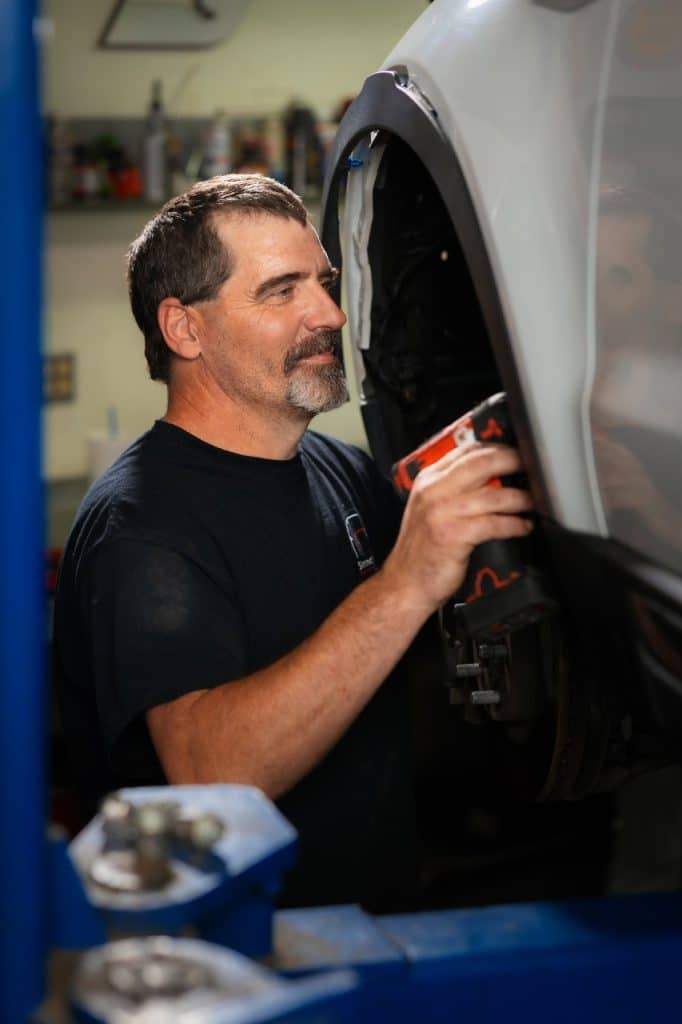
The traction battery is the heart of the hybrid system. It manages energy storage, powers the electric motor, and works in concert with the combustion engine to deliver the performance and efficiency these vehicles are known for. Over time, battery cells can degrade, charge capacity can decrease, and cooling system function can be affected.
The challenge is that a battery losing capacity does not always announce itself with a warning light. Fuel economy drops quietly. Electric range shortens. The vehicle still drives, but not the way it was designed to. The only way to know the actual condition of the traction battery is to measure it with factory-grade diagnostic tools that can read cell-level data, fault histories, and charge trends. A visual inspection tells you nothing useful here.
Cooling Systems
European hybrids manage heat across multiple systems, and each one has its own cooling circuit. The combustion engine has its own circuit. The high-voltage battery has its own circuit. In many configurations, the power inverter has one as well. Each circuit uses its own fluid and has its own inspection needs.
A problem in the battery cooling circuit does not feel like an overheating engine. It shows up as reduced electric performance, unexpected power limitations, or the vehicle dropping into a protective mode that restricts output. By the time a warning light appears, the system has already been managing a problem for a while. Proactive inspection of each circuit is the only way to stay ahead of it.
Regenerative Braking
Regenerative braking is one of the genuinely clever things about hybrid engineering. When you lift off the accelerator or apply light braking, the electric motor reverses its role and acts as a generator, recovering kinetic energy and feeding it back into the battery. That process handles a significant portion of everyday deceleration, which means the physical brake pads see less friction and wear less than they would on a conventional vehicle.
That sounds like good news, and it largely is. But there is a trade-off. According to AutoGuide.com, “reduced reliance on your regular brake pads can lead to atrophy, so even while they wear more slowly, moisture can build and rust can accumulate.” With less heat generated during braking, the hydraulic system has fewer opportunities to boil off moisture. Brake fluid absorbs moisture over time regardless of how often the pads are used, and degraded fluid affects braking performance in ways that pad thickness alone does not reveal.
Brake fluid inspection matters more on a hybrid, not less. The pads may look fine while the hydraulic system quietly needs attention.
Software and Module Updates
European hybrid systems rely on control modules that manage the handoff between the combustion engine and the electric motor, regulate charging behavior, and coordinate the vehicle’s energy management strategy. Outdated software can affect efficiency, drivability, and how the vehicle charges at home or at a public station.
Accessing these modules and applying manufacturer updates correctly requires factory-grade diagnostic tools. A generic code reader does not reach the full depth of a BMW or Porsche hybrid system. The update process itself often requires model-specific procedures that vary by year and configuration.
Why Specialized Care Matters for European Hybrids
A general shop can handle a lot of things. Hybrid vehicle maintenance on a precision-engineered European platform is not one of them, and that is not a criticism. It is an engineering reality.
These vehicles require proprietary diagnostic access to read full fault histories, not just surface-level codes. They require model-specific service procedures that vary across brands and years. And they require technicians who work on these platforms regularly, not occasionally.
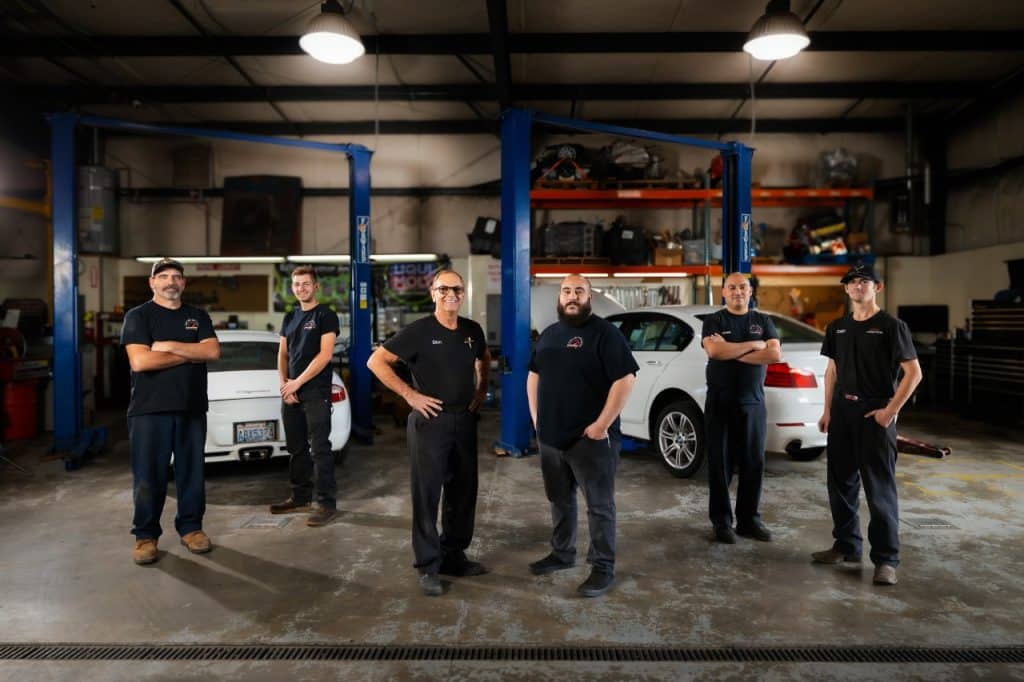
At Simmonson Automotive, we focus exclusively on European vehicles. BMW, Audi, Porsche, Volvo, Land Rover. We use factory-grade diagnostics to assess both sides of a hybrid system, the combustion engine and the high-voltage components, and we approach every service with the same precision these vehicles were built to receive. That is the difference between addressing a symptom and understanding what actually caused it.
Eastern Washington Driving Conditions and Your Hybrid
The Tri-Cities area puts specific demands on hybrid systems that milder climates do not. Cold winters reduce high-voltage battery performance and thicken fluids throughout the vehicle. Hot summers place added stress on cooling circuits, sensors, and battery thermal management systems.
Eastern Washington’s temperature swings are wide enough that seasonal inspections carry real value here. A battery diagnostic scan and a cooling circuit check at the start of summer and again before winter are not precautionary extras. For a vehicle operating in this climate, they are part of responsible hybrid vehicle maintenance.
Signs It Is Time to Come In
A hybrid running well still benefits from proactive diagnostic scans. Many developing issues do not trigger a warning light until the system has already been compensating for a while.
Come in sooner if you notice any of these:
- Reduced electric range that is not explained by temperature or driving conditions
- An unexpected drop in fuel economy over several tanks
- Warning lights related to the hybrid system, battery, or charging
- Any change in how the vehicle transitions between electric and combustion power, hesitation, roughness, or a shift in how it feels under acceleration
We will not guess at what is happening. We will run a full diagnostic assessment and tell you exactly what we find.
Protect the Investment You Made
A BMW, Porsche, Volvo, Audi, or Land Rover hybrid is a precision-engineered vehicle with two sophisticated systems working in concert. The hybrid system adds real complexity, and that complexity rewards specialized care from people who understand both sides of it.
If you are in the Pasco, Kennewick, or Richland area and want to know where your hybrid actually stands, schedule a diagnostic assessment with Simmonson Automotive. Contact our team to book your appointment.