
BMW has long been associated with luxury, innovation, and unparalleled driving dynamics. BMW owners everywhere appreciate their vehicles and want to keep them in top driving performance. However, what many BMW owners don’t know is that regular diagnostic checks are essential for maintaining a BMW’s performance, safety, and longevity. To give you a better understanding, we will cover how diagnostic tools detect potential issues early, how specialized BMW mechanics interpret these results, and why expert care matters for precision-engineered vehicles.
How Diagnostic Systems Work with BMW Mechanics

BMW’s onboard diagnostic system is among the most advanced currently available in the automotive industry. It’s a complex system with a wide range of sensors constantly collecting data. In most cases, when there is a problem, the car’s onboard system will flash an error code that can be utilized to identify the problem. However, sometimes errors can occur that require further investigation.
BMW mechanics use a variety of diagnostic tools and software to detect, monitor, and interpret issues with the car. For example, if there is an issue with your vehicle, BMW mechanics will use BMW’s official diagnostic software with a scanner plugged into the BMW diagnostic port.
From this, BMW mechanics can communicate with the car’s onboard systems to complete a comprehensive diagnostic scan. Should there be a system flaw, irregularities in the data will reveal it. This scan can also read and clear fault codes as well as provide real-time data monitoring to catch problems that may not generate an error message but are still impacting the car’s performance.
Why BMW-Specific Tools and Expertise Matter
Unlike some vehicles, where any auto-body shop can accurately diagnose and attend to problems, that is not the case with BMWs. BMWs require brand-specific software and tools to diagnose and interpret issues accurately. This, in turn, requires technicians to be trained to use and interpret diagnostic codes accurately.
While you can take your BMW to a general mechanic shop, there is a high chance that they would miss complex issues that certified BMW mechanics can detect or provide a repair that either doesn’t solve the issue or compounds the problem into something worse. One of the most concerning risks is how easy it is to mess up a BMW’s sophisticated electronic systems. Incorrect coding or calibration by untrained technicians can trigger error codes and system conflicts that can permanently damage sensitive components.
Think of it like going to a doctor. A general auto body shop is like a family practice. Family practices can treat most people most of the time. However, if you came to your family practice with a foot injury, the doctor would likely refer you to a podiatrist. While they certainly “could” treat your foot, they know that a specialist would do a better job. A BMW-trained technician is like that specialist. They are specifically trained to handle BMWs to provide the utmost care and service.
Common Problems Identified Through Diagnostics

While BMWs are considered the pinnacle of German engineering, they aren’t faultless. They can suffer from a variety of issues, from minor malfunctions to severe problems. Some of the most common issues that a BMW mechanic diagnoses are:
- Engine Misfire: Rough idling, decreased power, and unusual noises caused by faulty spark plugs, compromised ignition coils, clogged fuel injectors, etc.
- Transmission Issues: Slipping, hard shifting, or unusual noises caused by fluid requirements, gear ratio malfunction, etc.
- Brake Systems: Grinding, vibrating, squealing, or increased stopping distance due to brake fluid loss, compromised hydraulic pumps, etc.
- Fuel Pumps: Stalling, sputtering, or failure to start due to fuel filter change requirements, pump replacement, etc.
By having a qualified BMW mechanic perform a comprehensive diagnostic sweep of the vehicle, common problems like these can be quickly identified and repaired.
Recommended Diagnostic Schedule for BMWs
Just as we compared seeing a BMW mechanic to going to the doctor, your car needs regular checkups, just like people need annual physicals. It is typically recommended that BMW vehicles receive a full diagnostic check during Inspection 1 (after 30,000 miles) and Inspection 2 (after 60,000 miles). Then, it continues every 30,000 miles or whenever major service is required.
The key advantages of sticking to this schedule include preventing costly repairs, improving performance, enhancing fuel efficiency, and maintaining warranty compliance. We suggest reviewing the specific recommendations for your vehicle in the manual or by speaking with a BMW mechanic.
If you want to remain cautious, some BMW owners request annual diagnostic scans of their vehicle, even if there are no warning lights or apparent problems. In doing so, BMW mechanics may catch a minor issue before it becomes a problem. Additionally, having consistent data reports can help track your BWM’s performance over time.
However, it is essential to note that your BMW’s advanced Condition Based Service (CBS) system continuously monitors your vehicle’s condition and will alert you when specific maintenance items require attention. In addition to your regularly scheduled inspections, you should always take your car in for an inspection and diagnostic scan if any warning lights illuminate or if you notice potential issues.
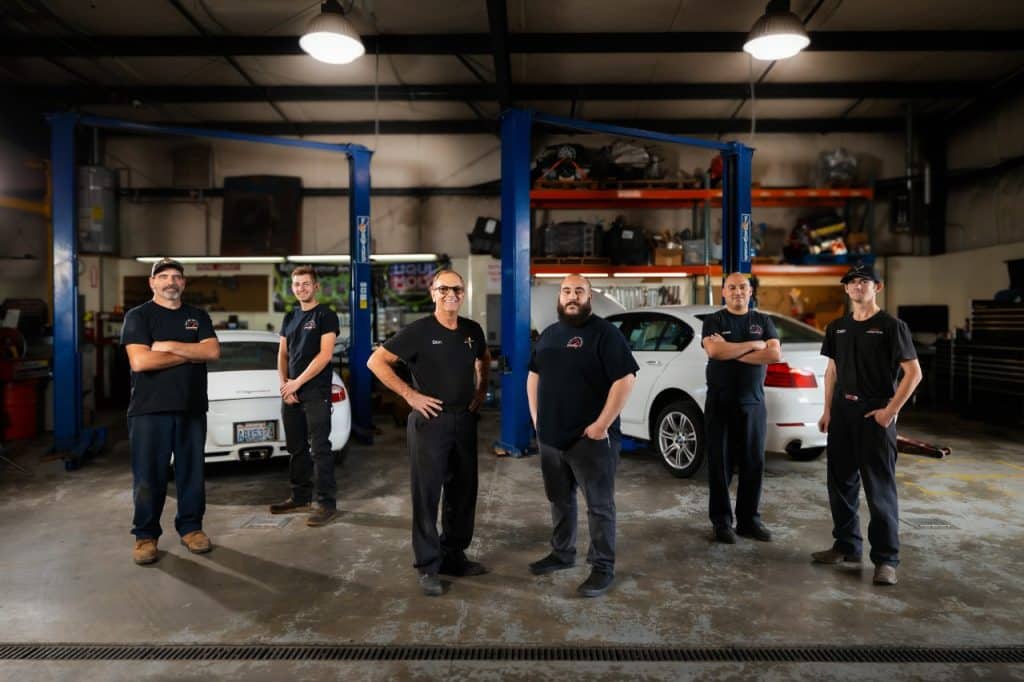
Why Choose Simmonson Automotive as Your BMW Mechanic
BMW owners in the Tri-Cities area and surrounding Eastern Washington communities who value professional, specialized care for their vehicles, we at Simmonson Automotive are your local expert in European car diagnostics and maintenance.
While non-specialized auto shops may offer lower upfront prices, the long-term costs can be substantial. We’ve often seen how improper repairs have led to a cascade of further problems, all of which compromise the safety and performance of the vehicle and end up costing more in the end.
When you work with a certified repair facility like us at Simmonson Automotive, your vehicle receives care from technicians who understand your BMW’s unique requirements to the smallest detail. Our team has undergone rigorous factory training specifically for BMW models, giving us the skills and expertise that general automotive shops cannot match. Keep your BMW running at peak performance. Schedule your next diagnostic service with Simmonson Automotive today and trust your vehicle to certified BMW experts.